What Is Rosemary Infused Olive Oil?
Written by: Berk Bahceci

Rosemary infused olive oil is not only a staple in the Aegean and Anatolian cuisines but also an emerging favorite in natural beauty routines. This fragrant, flavorful oil can transform dishes and also provide nourishing benefits to your hair. Let's explore how to craft this infusion at home, the best types of olive oil to use, and introduce a premium option for those seeking the highest quality, hassle-free option: Heraclea's organic, non-GMO olive oil.
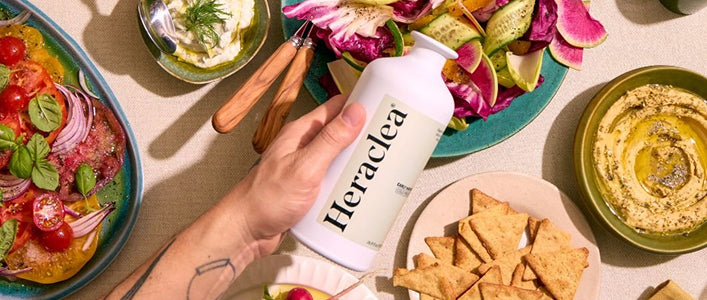
Heraclea's Premium Rosemary Infused Olive Oil
For those seeking the ultimate in quality and convenience, Heraclea presents an exceptional option: our Rosemary Infused Olive Oil. We start with our own organic extra virgin olive oil, pressed within hours of harvest from olives grown on our grove on Mount Latmos, on the Aegean coast of Turkey. We infuse it with organic rosemary sourced from the same growing region. The entire process happens at our mill under controlled conditions that home kitchens can't really replicate, which matters more than most people realize for an oil that contains fresh herb material.
The finished bottle is stable on your shelf for months rather than the four days that an FDA-compliant home infusion lasts in a refrigerator. Use it as a finishing oil on bread, vegetables, fish, or meat — or in a scalp massage if you're using it for the hair benefits I'll get to below.
How to make rosemary infused olive oil at home
If you'd rather make your own bottle, the process is simple. Doing it well requires a couple of things most online recipes get wrong, so let me walk through the version that actually works.
What you'll need. A 250 ml bottle of real extra virgin olive oil — fresh, peppery, recently harvested. If you don't have one already, our piece on what makes an olive oil good for cooking covers what to look for. Three to four sprigs of fresh rosemary, washed and then dried completely with a paper towel or air-dried for several hours. A clean glass bottle or jar with a tight seal. A small saucepan and a thermometer, if you're going to do the warm-infusion method I prefer.
Two methods worth knowing.
The traditional cold-infusion method is what most articles tell you to do. Submerge dry rosemary in olive oil, seal the bottle, and leave it to infuse for one to two weeks in a cool dark place — not the warm sunny windowsill that older recipes recommend. Light and heat degrade olive oil, and exposing your bottle to either accelerates the rancidity clock. Strain the rosemary out at the end of the infusion. Store the finished oil capped tightly in a cool dark cabinet, and use it within two to three weeks if you're being careful about the safety issues below.
The warm-infusion method is faster, the flavor extraction is more complete, and the brief heating step matters for safety reasons. Warm the olive oil and rosemary together in a saucepan over low heat, gently — aim for around 180°F (82°C), warm enough that you can smell the rosemary aromatics rising but well below smoking. Hold the temperature for 15 to 20 minutes, then turn off the heat and let it cool to room temperature in the pan. Strain the rosemary out, bottle the infused oil, store in a cool dark cabinet, use within three to four weeks. This is what I'd actually do at home if I were making it from scratch.
The safety issue most online recipes don't mention
This is the part where I have to be the bearer of slightly inconvenient news. Submerging fresh herbs in olive oil at room temperature creates the exact anaerobic environment in which Clostridium botulinum spores can grow. Rosemary can carry those spores from the field on the leaves. The oil seals out oxygen. The spores germinate. The result is botulinum toxin, which causes a serious foodborne illness in small doses and which doesn't break down even at cooking heat once it's formed.
The risk in any single home-infused bottle is small but real, and the FDA recommends that any oil infused with fresh herbs be refrigerated and used within four days, or made with a brief heating step that destroys the spores before they multiply. This is also why dried rosemary is the safer cold-infusion option than fresh — dried herbs carry far less moisture and far fewer viable spores. If you cold-infuse with fresh rosemary, refrigerate and finish quickly. If you cold-infuse with dried rosemary, you have a wider window. If you want a bottle that lives in your kitchen cabinet on normal cooking timelines, the warm-infusion method or a commercially produced bottle is the safer answer.
This is the main reason we make and sell a finished bottle in the first place. Our Rosemary Infused Olive Oil is processed in our mill under food-safety protocols and arrives shelf-stable. Home infusion is fun and rewarding when done right, but the quality and safety controls available at a working mill aren't really reproducible in a residential kitchen.
Benefits of rosemary infused olive oil
What you're actually getting when you cook with this oil is a stack of three benefit layers — the olive oil itself, the rosemary's own active compounds, and the everyday convenience of having both pre-married in a bottle.
The olive oil layer. A high-quality extra virgin base brings the same package of polyphenols — hydroxytyrosol, oleocanthal, oleuropein, and the rest — that has made olive oil the most-studied food in cardiovascular research. The 2013 PREDIMED trial documented roughly a 30% lower rate of major cardiovascular events for people who ate around four tablespoons of high-polyphenol EVOO daily over five years. Whatever rosemary you add on top doesn't take anything away from that olive oil chemistry; it stacks on top.
The rosemary layer. Rosemary carries its own family of polyphenols, principally rosmarinic acid and carnosic acid. Both have been studied for antioxidant and anti-inflammatory activity. Rosmarinic acid has been associated with mild cognitive and memory effects in older adults across a handful of small trials. Carnosic acid has shown neuroprotective effects in animal models. The research base is still early — none of this rises to a confirmed medical claim — but the chemistry is real and worth knowing about. You're not consuming a single compound when you cook with this oil; you're consuming a small daily dose of several.
The hair and skin angle. This is the use case that generates most of the search traffic on this topic, and the evidence is somewhere between intriguing and incomplete. A 2015 randomized trial out of Iran compared topical rosemary essential oil to minoxidil for androgenetic alopecia over six months and reported broadly comparable hair-count outcomes. Rosemary-infused olive oil is a much milder format than the essential-oil concentrate used in that trial — so I wouldn't claim equivalence — but as a warm scalp-massage oil or a hair-finishing treatment, it's a pleasant, well-tolerated option. The olive oil acts as a moisturizing carrier; the rosemary contributes scent and a fraction of the active compounds. Massage in, leave for thirty minutes to overnight, shampoo out.
The flavor convenience layer. Beyond the health story, infused oil is a kitchen shortcut. Instead of chopping and tempering fresh rosemary every time you want the flavor, you have it pre-infused into a fat that hits the pan or the plate already integrated. That's the difference between making pasta from scratch and reaching for the dried box — both have their place, but the bottle wins on weeknights.
What to use rosemary infused olive oil on
This oil is most useful as a finishing oil or a flavor amplifier rather than as a heavy cooking oil. The rosemary aromatics fade quickly under sustained heat, so the cleanest move is to use it where the heat has already happened or is minimal. For deeper cooking applications — sautéing, searing, frying — reach for a plain EVOO like our Mature Harvest and add the rosemary infusion at the finish. That sequence gets you cooking performance plus rosemary at full volume on the plate.
Specific applications that I rely on regularly:
Bread, raw. Pour a small pool onto a plate, season with flaky salt, dip a piece of crusty bread. This is the use case that introduces most people to the oil.
Roasted potatoes. Toss potato wedges in regular EVOO before roasting, then drizzle rosemary-infused oil over them after they come out of the oven. The post-roast drizzle preserves the aromatics that would otherwise burn off during the roast.
Grilled fish or chicken. Brush onto the cooked surface in the last thirty seconds on the grill, or pour over the plated dish at the table.
Tomato salad. The simplest summer salad — ripe tomatoes, flaky salt, this oil. Works just as well with burrata or fresh mozzarella, or alongside summer stone fruit like peaches and nectarines.
Marinade base. For lamb, chicken, or pork, mix with crushed garlic, lemon juice, salt, and pepper. Marinate from thirty minutes to overnight. Excellent for grilled lamb chops in particular.
Beans and lentils. A finishing drizzle on a bowl of white beans, lentils, or chickpeas transforms an everyday protein into something dinner-table worthy. This is one of the most underrated uses.
Focaccia or pizza dough. Brush onto the dough surface before baking. The herb flavor blooms and infuses the crust during the bake.
Eggs. Scrambled, fried, or in an omelet, finished with a small drizzle. Pairs especially well with feta or goat cheese folded in.
Hummus or labneh. Pool the oil on top of a finished spread, top with za'atar or paprika. Standard mezze move, instantly elevated.
Frequently asked questions
How long does rosemary infused olive oil last?
A commercially produced bottle (like ours) lasts roughly six to twelve months unopened, stored in a cool dark cabinet. Once opened, finish within two to three months for best flavor. A homemade cold-infused bottle made with fresh herbs should be refrigerated and used within four days unless the safety steps above are followed. A warm-infused homemade bottle, properly stored, holds for three to four weeks.
Can you cook with rosemary infused olive oil?
You can, but you'll lose most of the rosemary aromatics under sustained heat. The better move is to cook with plain EVOO and finish with the rosemary version. For the broader question of cooking with extra virgin olive oil generally, our piece on whether you can fry with olive oil covers the chemistry.
Is rosemary infused olive oil good for hair?
Topical rosemary oil has been studied for hair growth with promising early results, including a 2015 randomized trial that compared it favorably to minoxidil. Rosemary-infused olive oil is a milder format than the essential-oil concentrate used in that study, so I wouldn't promise hair regrowth, but it's a pleasant scalp massage oil that's well-tolerated. Warm a small amount, massage into the scalp, leave for thirty minutes to overnight, then shampoo out.
What does rosemary infused olive oil taste like?
A high-quality extra virgin olive oil with a layered woody, herbal aromatic on top. The rosemary brings pine, eucalyptus, and a slight bitterness; the olive oil carries the peppery polyphenol throat-tickle and the fresh green base. The two together are more complex than either is alone.
Can I use dried rosemary instead of fresh?
Yes, and it's actually the safer option for cold infusion. Dried rosemary carries far less moisture and far fewer microbial spores. The flavor profile shifts slightly — drier, more concentrated, with less of the fresh-herb top notes — but the result is still good. Use about half the volume you would of fresh.
Is rosemary infused olive oil gluten-free, vegan, and keto-friendly?
Yes to all three. Pure olive oil and pure rosemary, nothing else added.
Where do you make your rosemary infused olive oil?
At our mill near our grove on Mount Latmos, on the Aegean coast of Turkey. The olive oil base is our own extra virgin EVOO, pressed within hours of harvest. The rosemary is sourced from organic producers in the same growing region. The infusion happens at the mill under controlled food-safety conditions, and the finished oil is bottled in dark glass to protect the polyphenols. View the product here.
— Berk
What You'll Need

Rosemary Infused Olive Oil
Earthy, fragrant, and deeply Mediterranean.